

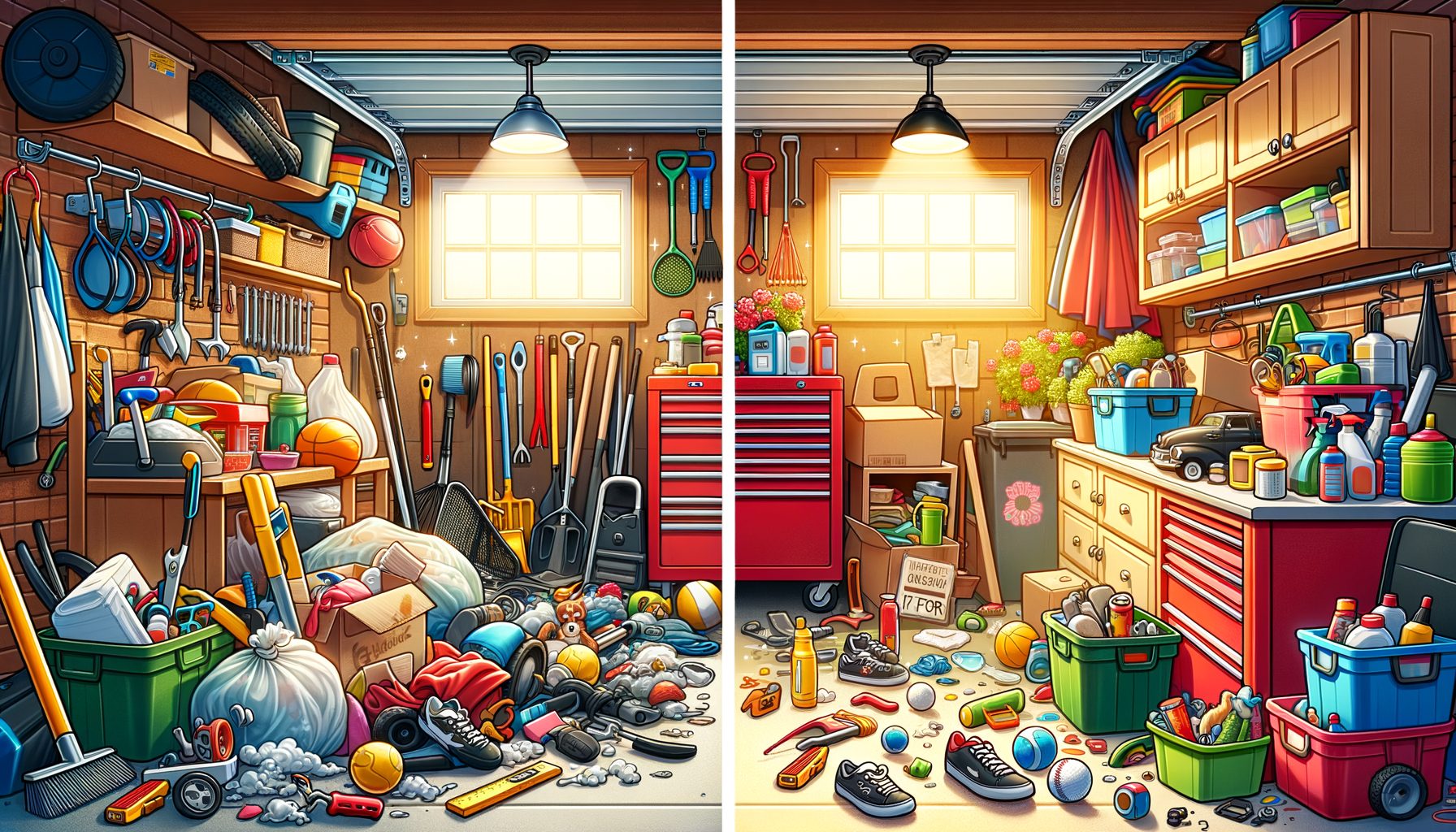
A messy garage overwhelms. You know there are treasures somewhere—tools, bikes, camping gear—but clutter makes everything hard to find and even harder to clean. Here’s a guide with smart garage cleaning tips to help you declutter, organize, and shine without wasting a weekend. You’ll get a clear plan, proven storage strategies, and maintenance routines that keep your space tidy long after the deep clean. Let’s turn your garage into a safe, easy-to-use, genuinely enjoyable space.
The Real Problem: Why Garages Become Clutter Traps (and What It Costs You)
Garages are the default parking spot for everything that doesn’t have a home in the house. Seasonal gear, unfinished projects, bulk purchases, old paint, and boxes of “deal with later” end up stacked on the floor. Over time, that pile turns into a barrier: you can’t park your car, you avoid the space, and essential items vanish at the exact moment you need them. The real issue isn’t just mess; it’s the cost of disorganization. Lost time searching, repurchasing items you already own, and possible safety risks—like trip hazards or flammable items stored near ignition sources—add up fast.
What sparks garage clutter? Life changes such as moving, having kids, or starting a hobby bring new items, but seldom a storage plan. Homes often lack a zone for odd-sized items like ladders and kayaks, so they spill into the garage. Another trap: “I’ll deal with it later.” Without a habit loop to put things back, even the cleanest garage reverts to chaos. Research on home organization routinely finds that visible systems—labels, dedicated zones, and vertical storage—dramatically improve follow-through because they reduce the thought needed to maintain order.
Safety also carries hidden costs. Garages often store fuels, batteries, chemicals, and power tools. Stacking cardboard boxes or leaving oily rags in a pile increases fire risk. Moisture from wet cars can invite mold on drywall and rust on tools. Inadequate ventilation can trap fumes. These issues are solvable with a smart plan: zone your garage, choose containers that fit your climate, label everything, store hazardous materials correctly, and schedule quick maintenance. With the right approach, you reclaim time, protect your gear, and create a safer environment for family and pets.
Here’s the good news: you do not need a full renovation. A single weekend, a clear method, and a few budget-friendly tools can transform the garage. The following sections break the work into simple steps—decluttering efficiently, choosing the right storage, and keeping the shine with minimal effort.
A Step-by-Step Smart Garage Cleaning Plan You Can Finish in a Weekend
Start with a plan that limits decision fatigue and keeps momentum high. Block out 4–6 focused hours, with breaks. If your garage is large or very full, split it into two sessions: Day 1 (declutter and deep clean), Day 2 (install storage and organize). Prep simple supplies: thick contractor bags, recycling bins, donation boxes, painter’s tape, a marker, PPE (gloves, mask, eye protection), a broom, a shop vac, microfiber cloths, an all-purpose cleaner, a degreaser, and a bucket. If you expect heavy dust or paint, add a respirator rated for particulates. Ensure good airflow by opening the garage door.
Step 1: Quick-sort by category. Pull items into broad groups on the driveway: tools, sports, lawn and garden, automotive, paint and chemicals, holiday, keepsakes, and “uncertain.” Grouping does two things: it reveals duplicates and creates instant zones for later storage. Use the “Four D” rule for each category: keep (definitely useful), donate, dispose (broken, expired, unsafe), and decide later (limit this to a small box).
Step 2: Handle hazardous items correctly. Separate fuels, automotive fluids, old paint, fertilizers, and solvents. Never pour chemicals down drains. Check your local household hazardous waste program for drop-off guidelines. The EPA provides clear instructions on safe handling and disposal at https://www.epa.gov/hw/household-hazardous-waste-hhw. Store these temporarily in a cool, ventilated area away from ignition sources.
Step 3: Deep clean. Remove floor debris with a broom, then a shop vac. Pre-treat oil spots with a degreaser, scrub with a stiff brush, and rinse lightly if your garage floor has drainage. Wipe shelves, baseboards, and door tracks with a mild cleaner. If you notice mold, avoid dry brushing that can aerosolize spores. Use a mold-appropriate cleaner and protective gear. Keep doors open for ventilation. For garage doors and openers, consult safety tips from the U.S. Consumer Product Safety Commission at https://www.cpsc.gov/Safety-Education/Safety-Education-Centers/garage-door-openers.
Step 4: Plan your layout using simple zones. Place painter’s tape on walls to mark zones: left wall for tools, back wall for seasonal storage, right wall for sports, front corner for lawn and garden, and a safe high shelf for chemicals. Keep daily-use items between knee and shoulder height. Reserve ceiling racks for light, bulky, low-use items like holiday decor. Leave at least 36 inches of walkway clearance.
Step 5: Install the basics before moving items back. Aim for one versatile wall system (track or pegboard) and sturdy shelves. Use clear, latching bins for general storage; opaque bins for photos or keepsakes (protect from light) with desiccant packs if humidity is high. Always anchor tall shelving to studs. Test placement with an empty-bin “mock load” before you commit.
Step 6: Put items back with labels and limits. Label by category and subcategory (for example, Sports—Balls; Tools—Fasteners; Garden—Fertilizers). Set capacity limits to prevent backsliding: one bin for spray paint, one for cords. If a bin fills up, something must exit. Keep one open “quarantine” bin for items that need repair or donation within 30 days.
Example scenario: A busy family with two kids, bikes, and weekend sports. Use vertical bike hooks along the right wall, a low bin for balls, a mid-height shelf for helmets, and a back-wall tote for off-season gear. Put tools near the workbench on a pegboard with outlined tool shapes to make every item’s home obvious. Keep automotive gear (jumper cables, inflator, windshield fluid) together near the door to the driveway.
Storage Solutions That Actually Work (Without Overspending)
Smart garage organization isn’t about buying the fanciest cabinets; it’s about choosing the right mix for your items and climate. Start by going vertical. Wall-mounted track systems adapt to changing needs—a single rail can hold hooks for ladders, shovels, hoses, and folding chairs. Pegboards excel for small tools because you can see everything at a glance. Shelving should be steel or heavy-duty composite, anchored to studs, with adjustable heights to fit bins properly and avoid wasted space.
Think of bins and boxes as the backbone. Clear, latching bins help you identify contents quickly and resist pests. Size matters: choose bins that are easy to lift when full (often 12–18 gallons for general items, 27-gallon for bulky gear). Use weather-resistant bins if the garage experiences humidity or temperature swings. Apply labels on two sides and the top for quick reads. For paper-based keepsakes or photos, use acid-free boxes and place them high and away from moisture-prone areas.
Ceiling storage racks are perfect for rarely used items. Ensure they are rated for your load and mounted into joists, not just drywall. Keep weight evenly distributed and avoid storing extremely heavy items overhead. For bikes, choose vertical hooks for tight spaces or horizontal wall racks for easier access. Scooters and skateboards can live on low hooks or in a tall rolling bin near the door, so kids put things back naturally.
Work zones reduce friction. A simple workbench with a shallow drawer organizer and a magnetic strip for frequently used tools streamlines DIY. A charging station with a power strip mounted above the bench can keep batteries off the floor; follow manufacturer guidance for lithium-ion battery charging and avoid charging near flammable materials. For combustible liquids, use approved containers and keep them in a ventilated, cool spot, away from ignition sources. The U.S. Fire Administration offers home safety guidance at https://www.usfa.fema.gov/safety/.
Pest and moisture control protect your investment. Avoid cardboard in damp climates; it attracts pests and collapses. Elevate items at least two inches off the floor using shelves or pallets, especially in flood-prone zones. Add a small hygrometer; aim to keep humidity between roughly 30–50%. Use a dehumidifier if needed, or improve airflow with vents and fans. Keep brooms, vacuums, and a doormat handy to quickly remove road grit that scrapes floors and damages gear.
Budget tips: Start with what you have—clean old totes, repurpose glass jars for screws and nails, and mount inexpensive 2×4 rails for hooks. Invest where it counts: safe shelving, a good labeler, and a wall system you can adjust as life changes. If you are debating cabinets versus open shelving, pick open unless you need dust protection; visibility increases the chance items get put back. For specialized gear (kayaks, skis, contractor tools), buy purpose-built mounts for safety and longevity.
Keep It Shining: Maintenance, Safety, and Seasonal Routines
The secret to a clean garage isn’t a marathon; it’s a few short sprints. Adopt the 10-minute reset: once a week, set a timer, return items to bins, sweep high-traffic areas, and empty the “quarantine” bin. Once a month, wipe shelves, check floor stains, and verify labels. Each season, rotate gear—bring forward what you’ll use and move off-season items up high. Done regularly, that rotation prevents overcrowding and keeps your system current with your life.
Safety routines are non-negotiable. Review chemical storage quarterly; discard expired products at approved facilities. Keep a small Class ABC fire extinguisher accessible and check its charge. Store oily rags in a sealed metal container to prevent spontaneous combustion. Ensure clear access to electrical panels and do not overload outlets. If your garage stores lithium-ion batteries (e-bikes, power tools), charge on a non-flammable surface, follow manufacturer guidance, and avoid charging unattended or overnight. For cleaning product handling and ventilation advice, see guidance from CDC NIOSH at https://www.cdc.gov/niosh/topics/cleaners/default.html.
Floor care matters for durability and cleanliness. If your concrete is dusty or stains easily, consider a sealer or an epoxy coating to resist oil and water. Before coating, test moisture by taping plastic to the floor overnight; visible condensation indicates you may need moisture mitigation first. Quick wins include floor mats in parking spots to capture drips and snowmelt. Leaks under cars should be addressed immediately to avoid spreading hazards and long-term stains.
Climate-smart tweaks keep your system resilient. In humid regions, use desiccant packs in sealed bins and consider anti-rust sprays for tools. In cold climates, create a parking drip zone and store salt and snow shovels near the garage door for easy access. In hot climates, avoid storing items that degrade with heat (candles, certain adhesives) and keep paints within recommended temperature ranges to prevent failure. For households in coastal areas, rinse tools lightly with fresh water after salty exposure and dry thoroughly before storage.
Audit your zones when life changes. New hobby? Add a labeled bin and a pegboard hook set. New baby or pet? Move chemicals higher and add childproof locks. Renovation project? Create a temporary project zone with a sunset date to ensure materials don’t linger. Clear visual cues—labels, colored tape outlines, and obvious “homes”—make it easy for every family member to help maintain the system. If something keeps landing on the floor, you need a bin or hook exactly where that drop happens. Design for human behavior, not ideal intentions.
Quick Reference: Time, Frequency, and Payoff
The table below gives practical estimates for planning, plus the benefits you can expect when you follow smart garage cleaning tips consistently.
| Task | Typical Time | Frequency | Main Benefit |
|---|---|---|---|
| Full declutter and deep clean | 4–8 hours (2 sessions) | Every 12–18 months | Resets space, removes hazards, reveals duplicates |
| Weekly 10-minute reset | 10–15 minutes | Weekly | Prevents pile-ups, keeps floors clear |
| Monthly shelf wipe and label check | 20–30 minutes | Monthly | Reduces dust, improves visibility |
| Seasonal rotation of gear | 45–60 minutes | Quarterly | Faster access to in-season items, less clutter |
| Hazardous material review | 20–30 minutes | Quarterly | Safety compliance, reduced fire and exposure risks |
Common Questions: Smart Garage Cleaning Tips
Q: How do I declutter when everything feels “useful someday”? A: Set strict limits by container. Give each category a fixed bin; if it overflows, choose what stays. Use a 30-day “quarantine” bin for maybes. If you don’t use an item in that window, donate or recycle it.
Q: What should never be stored in the garage? A: Avoid storing food that attracts pests, sensitive documents, and items that degrade in heat or humidity (certain paints, adhesives, candles, electronics). Keep fuels, solvents, and fertilizers in original containers and away from ignition sources. See EPA hazardous waste guidance at https://www.epa.gov/hw/household-hazardous-waste-hhw.
Q: How can I prevent oil and rust stains on the floor? A: Place drip mats where vehicles park, clean spills quickly with a degreaser, and consider sealing or coating the concrete. Keep humidity in check and dry wet items before storage to reduce rust.
Q: Is open shelving or closed cabinets better? A: Open shelves encourage consistent use and faster cleanup because everything is visible. Choose closed cabinets if you need dust protection or lockable storage for chemicals and sharp tools. Many garages benefit from a mix.
Q: What’s the best low-cost storage upgrade? A: A wall-mounted track with hooks and a set of clear, latching bins. Add a labeler and you’ve built a flexible system that adapts as your needs change.
Conclusion: Your Garage Can Be the Cleanest Room in the House
Let’s recap. You learned why garages become clutter traps and how that chaos costs time, money, and safety. You now have a weekend-ready system: quick-sort by category, deep clean, set smart zones, install strong basics, and put everything back with labels and limits. You explored storage solutions that actually work—vertical tracks, sturdy shelves, clear bins, and climate-aware choices—and you saw how small, consistent routines keep your garage clean without effort. With these smart garage cleaning tips, you can declutter, organize, and shine—then keep it that way.
Now act. Block time on your calendar this week for a 90-minute sprint. Print or note the steps, set up your sorting piles, and start with one wall. As you go, separate hazardous items for safe disposal through your local program. If you need guidance on chemicals, check EPA’s resources at https://www.epa.gov/hw/household-hazardous-waste-hhw. For safety checks and fire prevention, review U.S. Fire Administration advice at https://www.usfa.fema.gov/safety/. When you’re ready to recycle responsibly, find nearby drop-offs with Earth911 at https://search.earth911.com/.
Invite your household to help by assigning zones and labels everyone understands. Keep your weekly 10-minute reset non-negotiable. When something keeps landing on the floor, add a hook or bin right where the habit happens. If you feel stalled, remember that progress beats perfection: one shelf organized today is better than a perfect plan someday.
Your garage can become a clean, safe, and efficient launchpad for daily life—a place where you find what you need, start projects confidently, and pull in the car without dodging boxes. You have the plan. You have the tools. Start today, and by next weekend you’ll be walking into a space that works for you. Ready to open the door and make your garage shine? What’s the first zone you’ll conquer?
Helpful Links
EPA Household Hazardous Waste Guidance: https://www.epa.gov/hw/household-hazardous-waste-hhw
U.S. Consumer Product Safety Commission: Garage Door Opener Safety: https://www.cpsc.gov/Safety-Education/Safety-Education-Centers/garage-door-openers
U.S. Fire Administration: Home Safety Resources: https://www.usfa.fema.gov/safety/
CDC NIOSH: Cleaning Chemicals and Ventilation: https://www.cdc.gov/niosh/topics/cleaners/default.html
Earth911 Recycling Search: https://search.earth911.com/
Sources
Environmental Protection Agency (EPA). Household Hazardous Waste. https://www.epa.gov/hw/household-hazardous-waste-hhw
U.S. Consumer Product Safety Commission (CPSC). Garage Door Openers. https://www.cpsc.gov/Safety-Education/Safety-Education-Centers/garage-door-openers
U.S. Fire Administration (USFA). Safety and Prevention. https://www.usfa.fema.gov/safety/
Centers for Disease Control and Prevention (CDC), NIOSH. Cleaning and Disinfecting Safety. https://www.cdc.gov/niosh/topics/cleaners/default.html
Earth911. Recycling Locator. https://search.earth911.com/