

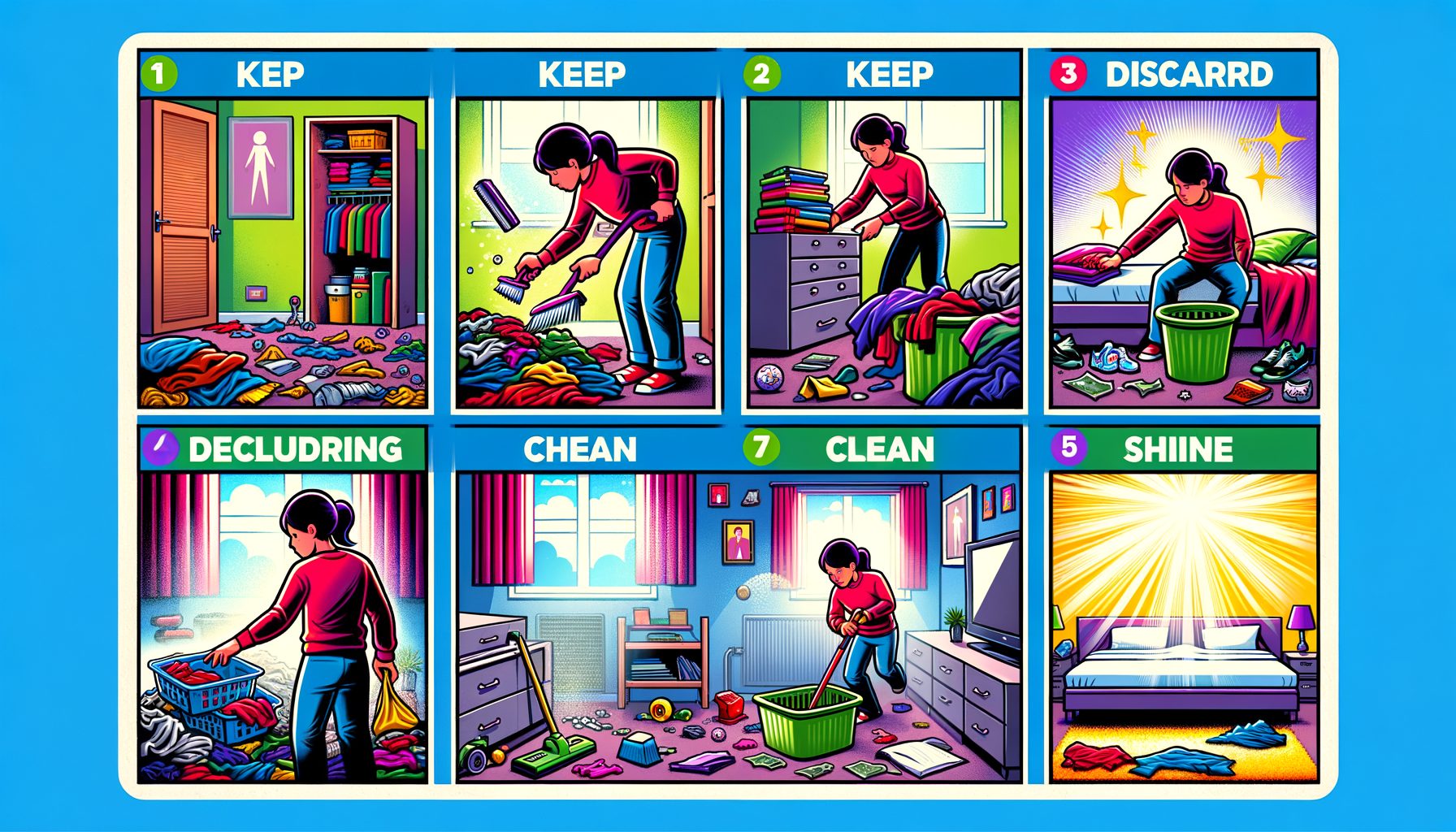
Bedroom still looks messy no matter how often you tidy? You’re not alone. Clutter piles up fast, dust hides in fabrics, and busy schedules push deep cleaning to “later.” Below, you’ll find Bedroom Cleaning Tips that help you declutter, deep clean, and keep the space shining—without burnout. In minutes, you’ll learn a simple reset system, ways to cut allergens, and small habits that make “clean” feel effortless. Ready to wake up to a calm, hotel-fresh room every day?
The real problem: why your bedroom never feels clean
Chaos creeps in for predictable reasons: flat surfaces become drop zones, fabrics trap invisible dust, and there’s often no set routine to reset the space. The result? Stress rises, motivation drops, and sleep can suffer from hidden allergens. Studies on indoor air quality consistently show that soft surfaces (mattresses, carpets, curtains) hold dust and dander longer than hard floors. Add phones, chargers, and cups migrating onto nightstands, and it’s obvious why “messy” keeps returning.
Picture the room as three layers: stuff (clutter), surfaces (hard and soft), and air. Ignore one, and the others unravel. Declutter but skip the mattress and floors, and the room still feels stale. Deep clean yet leave knickknacks on every surface, and your brain reads “busy,” not “calm.” Many people also clean in bursts—right before guests or when the mess is unbearable—rather than doing small, regular resets. A sustainable system changes that pattern.
Time is a trap, too. People overestimate how long basic cleaning takes and underestimate how much time is lost hunting for things. A 10-minute nightly reset can prevent an hour-long weekend ordeal. Smart tools speed everything up: a handheld vacuum for crumbs, a microfiber cloth that actually captures dust, and under-bed storage that gives weekly-use items a home. Air and allergens often fly under the radar. Dust mites thrive in warm, humid fabrics; cut humidity and wash bedding regularly, and the whole room feels fresher—sensitive sleepers usually notice the difference.
If your bedroom never looks “finished,” the root cause is usually a missing routine plus unclear homes for essentials. The fix is a repeatable flow: declutter fast, clean top-to-bottom, refresh fabrics, then maintain with short weekly and nightly habits. The sections below break it down so you can start today and see results after your first reset.
Fast decluttering that actually sticks
Decluttering works best when it’s fast, obvious, and repeatable. Begin with the “Clear + Contain” method: remove everything from visible surfaces, then return only what you use nightly or daily. Keep just a lamp, a book, and water on the nightstand. Move chargers into a small cable box or clip them behind the table so they’re accessible but invisible. The effect is immediate—your room shifts from busy to calm.
Try next: the 4-bin sweep for speed—Keep, Relocate, Donate, Trash. Set a 10–15 minute timer and move clockwise through the room. Anything out of place gets sorted on the spot. Clothes to “Keep,” a mug to “Relocate” (kitchen), dated magazines to “Recycle/Trash,” and duplicates or unloved decor to “Donate.” Decide quickly; if you haven’t used an item in 60–90 days (and it’s not seasonal), it goes to Donate. Unsure? Create a “Maybe” tote you revisit in 30 days. If it stays closed, donate it as-is without re-sorting.
Create micro-zones with clear homes: sleep zone (bed, pillows, blankets), care zone (skincare, medicine, tissues), style zone (closet, mirror, accessories), and tech zone (chargers, headphones). Add drawer dividers for small items and place a slim tray on the dresser for daily carry (keys, watch, wallet). Under-bed storage is your best friend for off-season bedding or bulky sweaters—choose labeled, low-profile bins for painless retrieval. Short on closet space? A single rolling rack dedicated to current-season staples can transform your mornings and reduce visual noise.
Clothes drive most clutter. Use a “hanger test”: turn all hangers backward today. When you wear an item, return it on a forward-facing hanger. After 60 days, donate the untouched pieces. For drawers, fold items file-style (standing) so everything is visible—no digging, no re-messing. Paper piles vanish when digitized: scan or snap photos of warranties, manuals, or sentimental notes and store them in a labeled cloud folder.
Let constraints do the heavy lifting: one laundry basket in the room (not two), one decorative pillow per person, one “inbox” tray for pocket items, and a one-nightstand rule—nothing that doesn’t support sleep stays there. With fewer decisions, the room stays clear by default, and cleaning becomes fast again.
Deep clean blueprint: top-to-bottom, faster results
Deep cleaning runs smoothly when you follow gravity: ceiling to floor. If weather allows, open the windows for fresh air. Next up, dust high surfaces—ceiling corners, light fixtures, and the tops of wardrobes—with a microfiber duster. Work down to frames, mirrors, shelves, and baseboards. Microfiber is chosen because it traps dust instead of just moving it around. For sticky dust on nightstands or headboards, lightly dampen the cloth.
Now, the bed. Strip bedding, wash sheets and pillowcases in hot water per care labels, and vacuum the mattress with a clean upholstery attachment. If the manufacturer permits, sprinkle a light layer of baking soda, wait 15–30 minutes to absorb odors, then vacuum thoroughly. Rotate the mattress 180 degrees every 3–6 months to distribute wear; if it’s flippable, flip it twice per year.
Floors come next. Vacuum slowly with a HEPA-filter vacuum to capture fine particles; take two passes in high-traffic lanes. On hard floors, vacuum first, then damp-mop with a pH-neutral cleaner. Don’t skip under the bed—use a crevice tool or a low-profile vacuum head. Switches, door handles, and remotes can be wiped with a lightly disinfecting cloth. Finish by polishing mirrors and windows; more light, more “just-cleaned” shine.
Use the table below as a quick reference for tools, timing, and frequency. Adjust for local climate, pets, and allergies.
| Task | Best Tool | Frequency | Avg. Time |
|---|---|---|---|
| High dusting (ceiling, fixtures) | Extendable microfiber duster | Monthly | 8–10 min |
| Surface wipe (nightstands, dresser) | Microfiber + mild cleaner | Weekly | 6–8 min |
| Mattress vacuum + rotate | HEPA vacuum upholstery tool | Vacuum monthly; rotate 3–6 months | 10–15 min |
| Floor vacuum/mop | HEPA vacuum + pH-neutral mop | Weekly (more with pets) | 10–20 min |
| Bedding wash (sheets/pillowcases) | Washer, hot water per care label | Weekly | 5 min load time |
Time-savers you’ll feel: keep a small caddy under the bed with microfiber cloths, glass cleaner, and disinfecting wipes; when supplies live in the room, cleaning happens more often. Pillow and mattress protectors reduce how often deep-cleaning is needed. For allergy-sensitive households, a HEPA purifier can help cut airborne particles; place it near the bed with a few inches of clearance from walls for better airflow. For guidance on improving indoor air quality, the U.S. Environmental Protection Agency offers a practical overview you can adapt for any home: EPA Indoor Air Quality Guide.
Fabrics, allergens, and air: make it healthier to breathe
Fabrics anchor comfort—and collect allergens. Prioritize the textiles closest to your face: pillowcases, sheets, duvet cover, and the pillows themselves. Most people sleep better when sheets are washed weekly; pillowcases may need even more frequent swaps due to skin and hair oils. The Sleep Foundation summarizes common guidance here: How Often Should You Wash Your Sheets?. Wash in the warmest water safe for the fabric, and dry completely to prevent musty odors. If you’re sensitive, a gentle, fragrance-free detergent is wise.
And dust mites? They thrive in warm, humid environments and feed on skin flakes. Simple habits help: encase pillows and mattress in zippered, allergen-proof covers; wash bedding hot; and keep bedroom humidity around 40–50%. The CDC lists dust as a common asthma trigger and provides prevention tips: CDC: Common Triggers. Where humidity spikes, a small dehumidifier can make a noticeable difference.
Look beyond the bed. Fabric headboards and upholstered benches should be vacuumed with an upholstery tool monthly. Curtains can be washed or dry-cleaned per label; if that’s not feasible, vacuum them top-to-bottom with a soft brush attachment. Area rugs benefit from slow weekly vacuuming; if washable, launder them seasonally. For throw blankets and decorative pillows, rotate washes—one item per week keeps freshness high without adding laundry overload.
Air quality completes the picture. A HEPA air purifier can reduce fine particles and pet dander; choose a unit sized to your room and run it on low while you sleep. Keep vents and returns dust-free. If scented candles or diffusers trigger headaches, go unscented and boost ventilation—crack a window for even 5–10 minutes when weather permits. Indoor plants are beautiful, but don’t rely on them to purify air; ventilation and filtration do the heavy lifting. For respiratory guidance and managing dust mites, the American Lung Association’s tips are a practical starting point: ALA: Dust Mites.
Now set reminders that fit your lifestyle. Weekly: sheets and pillowcases, a quick floor vacuum, surface reset. Monthly: mattress vacuum, curtain vacuum, baseboards. Seasonally: wash pillows (check label—many are machine-washable), refresh the duvet insert, and edit the closet. When fabric care meets airflow control, rooms stay cleaner longer—and mornings feel better.
Q&A: quick answers to common bedroom cleaning questions
Q: How often should I wash sheets and pillowcases?
A: Weekly is a solid baseline. If you have allergies, sweat at night, or let pets on the bed, wash pillowcases every 3–4 days. Follow care labels and use the warmest safe water.
Q: What’s the fastest way to make my room look clean?
A: Clear surfaces first—nightstand, dresser, floor. Make the bed tightly, then vacuum visible areas. Five to ten minutes of surface clearing creates the biggest visual change.
Q: Do I really need a HEPA vacuum?
A: It helps. HEPA filtration reduces fine particles that regular vacuums can recirculate, which is especially useful for allergies, pets, or carpeted bedrooms. On a tight budget, vacuum more slowly and more often.
Q: How do I stop clothes from piling up?
A: Add a single, easy-to-reach hamper; run the hanger test to spot rarely worn pieces; and set a two-minute end-of-day routine: clothes go “back, basket, or wash.” Constraints beat willpower.
Conclusion: your clean-bedroom game plan starts now
Here’s the recap. A bedroom that stays clean comes from a clear system: remove visual clutter, deep clean from ceiling to floor, refresh fabrics on a schedule, and keep air fresh with smart habits. You’ve seen how to declutter quickly with the 4-bin method and micro-zones, how to deep clean efficiently with top-to-bottom steps, and how to manage fabrics and air for better sleep and fewer allergens. With a small toolkit—microfiber cloths, a HEPA vacuum, mattress and pillow protectors—hotel-level freshness is achievable without hotel-level effort.
Take one action today. Clear your nightstand and dresser, start a load of sheets, or vacuum the mattress. Add one weekly habit next: every Sunday, wash bedding and do a 15-minute floor-and-surface reset. Reduce friction by keeping a mini caddy in your room. Sharing the space? Agree on micro-zones and a five-minute nightly reset—teamwork speeds everything up.
Small steps compound. You’ll see less dust, lose fewer items, and feel calmer at bedtime. The system starts working with your life, not against it. Busy week ahead? No problem. With fewer items and clearer homes, the room recovers fast. That’s the real win—your energy and your sleep get protected.
Start now: set a 10-minute timer, put on your favorite playlist, and give your space the reset it deserves. Your future self—better rested, more focused—will thank you. Ready to wake up in a room that feels like a fresh start every day? Which corner will you transform tonight?
Sources
U.S. Environmental Protection Agency: The Inside Story – A Guide to Indoor Air Quality
Centers for Disease Control and Prevention: Common Asthma Triggers
Sleep Foundation: How Often Should You Wash Your Sheets?