

Marble is timeless and luxurious, but it can be unforgiving when life gets messy. If you have ever watched a coffee ring, lemon splash, or makeup smear mark your countertop, you already know the main problem: marble is beautiful yet sensitive. In this guide, you will get clear, practical steps to keep a stain-free shine without fear. You will learn exactly why marble marks so easily, how to build a simple daily routine, how to remove tough stains safely, and when polishing or sealing makes sense. Use these expert tips to make marble surface cleaning fast, confident, and stress-free.
Why Marble Stains and Etches: Know the Enemy
Before you clean, it helps to understand why marble misbehaves. Marble is mostly calcite, a mineral that reacts with acids. When acidic liquids—like lemon juice, vinegar, wine, or cola—touch marble, they do not “stain” in the usual way. They dissolve a tiny bit of the surface, leaving a dull, light spot called an etch. Etching is a physical change, not a pigment sitting on top. That is why scrubbing often does not work on etch marks; the gloss must be restored by re-polishing. Because calcite sits around a 3 on the Mohs hardness scale, scratches occur more easily than on harder stones like granite.
Porosity adds a second challenge. Marble can absorb oils, dyes, and colored spills if they sit long enough. Oil-based stains darken the stone, while organic stains (coffee, tea, tomato sauce) tend to leave brownish or yellowish marks. Metal items can leave rust or greenish oxidation marks near sinks. What’s interesting too: even water spots can appear, usually as mineral deposits or faint rings from hard water drying on the surface. The combination of sensitivity to acid plus mild porosity is why quick response and the right products matter.
In practical tests on residential kitchen islands, a small droplet of lemon juice left for under 10 minutes created a visible etch ring, while a coffee spill left for an hour produced a light brown shadow that responded to a poultice. The contrast shows a key idea: acids create etches; colored or oily liquids create stains. Treat them differently. Avoid common myths like “vinegar cleans everything.” Vinegar is acidic and will etch marble. Also skip powdered abrasives and bleach. Stick with pH-neutral cleaners, soft microfiber, and targeted stain-removal methods. Understanding these basics prevents panic, saves money on unnecessary products, and keeps your marble looking like new.
Daily Marble Surface Cleaning Routine: Simple Habits That Prevent Damage
A smart daily routine is your best defense. Scrubbing hard is not the point; gentle, consistent cleaning is. Start with dry dusting once a day using a clean, dry microfiber cloth or a soft dust mop for floors. Dry dusting collects grit that can scratch when dragged across the surface. For kitchens, a quick pass after meal prep goes a long way. On bathroom vanities, remove toothpaste and cosmetics promptly—they can contain mild acids, dyes, or oils that stain or etch.
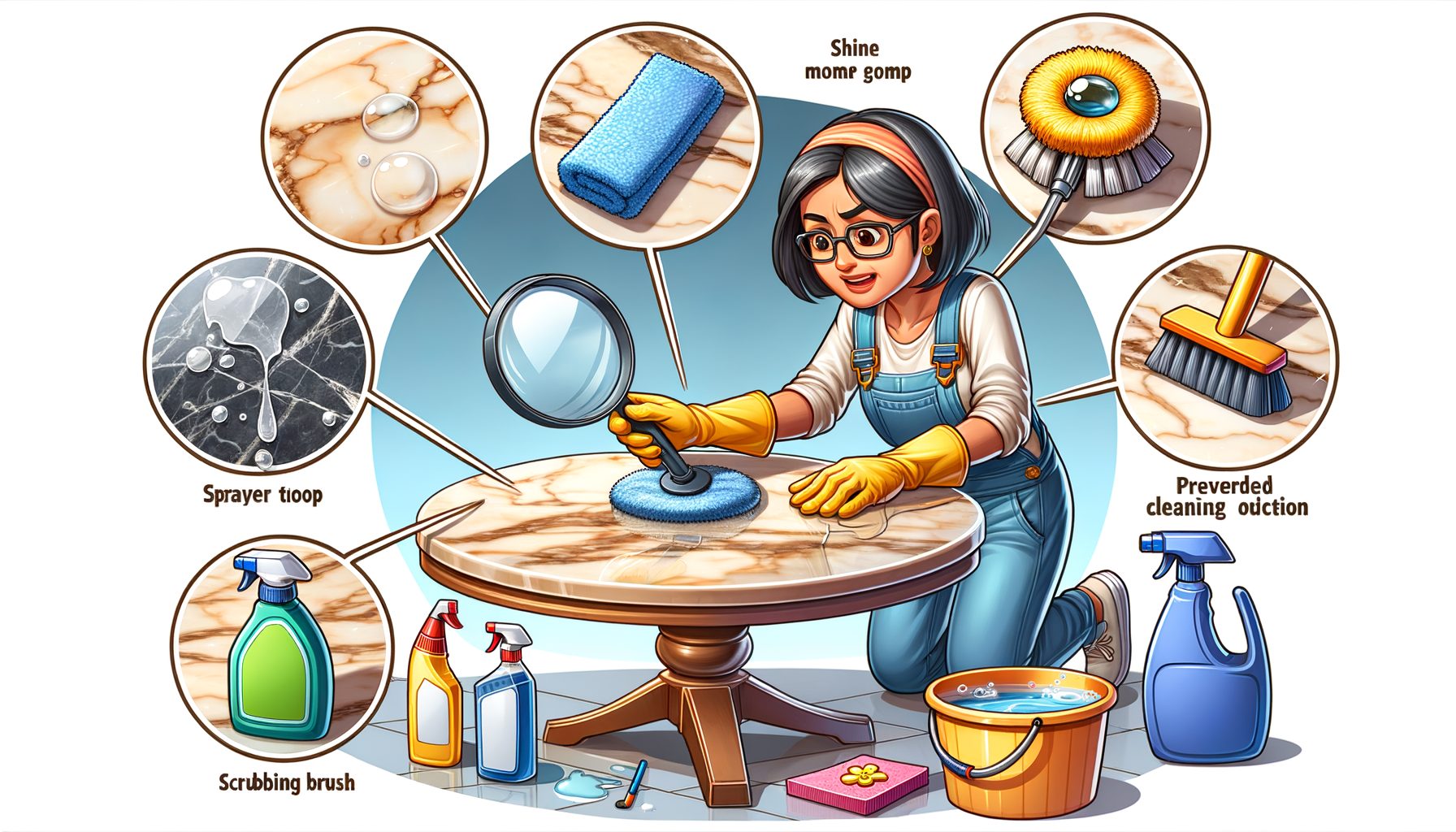
As for general cleaning, reach for a pH-neutral stone cleaner or a simple mix: distilled or clean tap water with a drop of mild, non-citrus dish soap per cup of water. Lightly mist the surface, wipe with a microfiber cloth, then rinse using a fresh cloth dampened with plain water. Finally, dry thoroughly. Drying often gets skipped, yet it is crucial; it prevents mineral spots from hard water and stops moisture from carrying oils deeper into pores. If you use tap water with high mineral content, consider finishing with distilled water to reduce spotting.
Respond to spills immediately. Blot—do not wipe—so you do not spread the spill. For cooking oils, use a dry towel to absorb, then follow with your neutral cleaner. For wine or coffee, blot and rinse with neutral cleaner quickly. Heat shocks should be avoided; placing hot pots directly on marble can cause thermal stress and rings from trapped moisture. Use coasters under glasses and trivets under cookware. In showers, a brief squeegee session after use minimizes soap scum and hard water buildup.
What to avoid: vinegar, lemon-based cleaners, bleach, ammonia, and scouring powders. These can etch, discolor, or scratch marble. Also skip colored sponges that may transfer dyes when used with solvents. When using any new cleaner, test on an inconspicuous spot first. As a general benchmark, daily wipe-downs take under five minutes for an average kitchen island, and weekly deeper cleaning (including edges and backsplashes) takes about 10–15 minutes. The time spent on gentle, regular care is time saved on heavy restoration later.
Removing Stains Safely: Poultice, Peroxide, and Other Proven Methods
When stains happen, the right method depends on the cause. Always identify the stain type first: organic (coffee, tea, wine, food), oil-based (cooking oil, lotions, cosmetics), metal-related (rust), ink/dye, biological (mildew), or etch (not a stain). Organic and oil-based stains respond well to poultices, a time-tested technique that uses an absorbent material mixed with a suitable agent to draw the stain out of the stone. Think of a poultice as a “stain magnet” that pulls contaminants upward as it dries.
Basic poultice steps: (1) Clean the area with a pH-neutral cleaner and dry it. (2) Mix an absorbent base—diatomaceous earth, talc, or even baking soda—with the right liquid to form a peanut-butter-like paste. For organic stains, use 3–12% hydrogen peroxide (higher strengths like salon-grade developer work faster but require gloves and caution). For oil-based stains, use acetone or a dedicated stone-safe solvent. (3) Apply 3–6 mm (about 1/8–1/4 inch) of paste over the stain, extending slightly beyond the edge. (4) Cover with plastic wrap, tape the edges, and let it dwell 12–24 hours. (5) Remove plastic, allow to dry completely, then lift the dried poultice and rinse. Repeat if needed. Many stains fade significantly after one or two cycles.
On rust stains, choose a marble-safe commercial rust remover; avoid acidic rust removers intended for metals or tile. Ink or dye often responds to a solvent-based poultice with acetone or alcohol, but always test first. Biological growth near damp areas responds to a diluted hydrogen peroxide wipe, followed by better ventilation and drying. Remember: etch marks require re-polishing, not poulticing.
Safety matters. Use gloves, provide ventilation, and keep solvents away from open flames. Never mix chemicals (for example, hydrogen peroxide and acetone together). Then this: if a stain is deep or wide, consult a stone restoration professional. The table below summarizes common stains and proven approaches for quick reference.
| Stain Type | Common Sources | What You See | Recommended Approach | Key Notes |
|---|---|---|---|---|
| Organic | Coffee, tea, wine, fruit, sauces | Brown/yellow shadow or ring | Poultice with 3–12% hydrogen peroxide + absorbent | Test first; repeat 1–2 times if needed |
| Oil-Based | Olive oil, cooking spray, lotions, cosmetics | Darkened spot that looks “wet” | Poultice with acetone or stone-safe solvent + absorbent | Improve degreasing; avoid heat that sets oils |
| Rust/Metal | Steel cans, tools, fixtures | Reddish-brown or orange stain | Marble-safe rust remover; professional help if deep | Avoid acids; protect fixtures from prolonged moisture |
| Ink/Dye | Markers, hair dye, cosmetics | Sharp-colored spot | Solvent-based poultice (acetone/alcohol) + absorbent | May lighten; deep dye can be challenging |
| Biological | Mildew, algae in damp areas | Green/black film or patches | Hydrogen peroxide wipe; improve drying/ventilation | Seal after surface is fully dry |
| Etch (not a stain) | Acids: lemon, vinegar, cola, cleaners | Dull, light spot; no color | Polish/hone with marble powder or pro refinishing | No poultice; restore shine mechanically |
Polishing and Sealing Marble: What Works and What’s Hype
Sealing and polishing are not the same—and knowing the difference saves time and money. A penetrating sealer (also called an impregnator) reduces how quickly liquids soak into marble. It does not make marble stain-proof, and it does not stop etching from acids. Think of a sealer as buying “reaction time”: spills bead longer on the surface so you can wipe them before they penetrate. To check if your marble needs sealing, do a simple water-drop test: place a teaspoon of water on the surface. If the spot darkens quickly (within a few minutes), it is time to reseal; if it beads for 10–15 minutes without darkening, you are in good shape.
Choose a reputable, stone-specific penetrating sealer. Water-based products are low odor and easier for indoor use; solvent-based options can penetrate well but require strong ventilation and careful handling. Consider VOC regulations in your area and look for transparent performance claims, like expected lifespan and stain resistance. Typical reapplication ranges from 6 to 36 months depending on usage and product. High-traffic kitchens may need resealing more often than low-traffic bathrooms. Follow label instructions and wipe off excess during application; leaving sealer residue on top can cause haze.
Polishing addresses etches and micro-scratches by mechanically refining the surface. For small etch marks on polished marble, consumer-grade marble polishing powders (often oxalic acid-based) can restore shine with a soft pad and careful technique. However, deeper etches, lippage, or widespread wear usually require professional honing with diamond abrasives to reset the finish evenly. Honed finishes (matte) hide etches better than high-gloss finishes in busy kitchens, so your finish choice affects maintenance. If you have frequent acidic cooking (tomato, citrus), a honed finish can be more forgiving day-to-day.
Beware of short-term “topical” coatings marketed as miracle solutions. Film-forming coatings can trap moisture, change slip resistance, and may peel or discolor over time. They also make future refinishing harder. Stick to breathable penetrating sealers and mechanical polishing for long-term results. As a budget estimate, professional honing and polishing can range widely by region, but many homeowners plan for a few dollars per square foot for light work and more for full restoration. Combine smart sealing with a gentle cleaning routine, and major refinishing will be spaced out by years.
Safety, Sustainability, and Cost: Smart Choices for Long-Term Care
Good marble care is not only about shine—it is about safe methods, sustainable products, and smart budgeting. Start with personal safety: wear gloves for any poultice or sealer application, ventilate the area, and protect nearby wood or metal from drips. Solvents like acetone evaporate quickly; keep them away from heat and open flames and store them carefully. Always read product labels, and never mix chemicals. Test any new product on an inconspicuous area before full use.
For sustainability, prioritize pH-neutral, stone-safe cleaners with clear ingredient disclosure. Many effective options carry eco-certifications such as the EPA’s Safer Choice label, which signals that a product meets standards for human and environmental health. Distilled water can reduce reliance on stronger chemicals by preventing mineral spots in the first place. Microfiber cloths reduce waste compared to paper towels and clean effectively with less cleaner. When you do use solvents for oil stains, use the smallest amount needed and dispose of rags safely according to local guidelines—solvent-soaked rags can be a fire hazard if not handled correctly.
Cost management is straightforward when you focus on prevention. A bottle of pH-neutral cleaner and a set of microfiber cloths cover most daily needs. A small kit for poulticing (absorbent powder plus peroxide or a stone-safe solvent) handles occasional stains for a fraction of the cost of a service call. Sealer costs vary by brand and coverage, but resealing a typical kitchen once a year is still far less expensive than replacing or fully refinishing countertops. If you cook often with acidic ingredients, a honed finish may reduce visible etch repairs over time, which also saves money and time.
Finally, think long-term. Keep coasters and trivets visible so everyone uses them. Add a little reminder near the coffee machine or bar: “Blot spills, do not wipe.” Encourage family or roommates to dry surfaces after cleaning. Small behavior changes compound. The result is a safer home, a smaller environmental footprint, and marble that looks fresh and valuable for years.
FAQs
Q: Can I use vinegar or lemon to clean marble?
A: No. Both are acidic and will etch marble, leaving dull spots. Use pH-neutral, stone-safe cleaners instead.
Q: How often should I seal marble?
A: It depends on usage and product. Do a water-drop test every few months. If water darkens the stone quickly, reseal. Many homes reseal every 6–18 months in high-use areas.
Q: Will sealing stop etching?
A: No. Sealers reduce stain absorption but do not protect against acid etching. Prevent etches with coasters, trivets, and fast spill cleanup.
Q: How do I remove a dull ring from lemon juice?
A: That is an etch. Use a marble polishing powder for small spots or call a stone pro for deeper or widespread etching.
Q: Is baking soda safe for marble?
A: Baking soda is mildly alkaline and can be used in poultices, but avoid scrubbing with abrasive pastes. Always test in a hidden spot first.
Conclusion
Keeping marble bright is easier when you understand its two weak points: it etches with acids and can absorb stains over time. You have seen how to prevent damage with a simple daily routine, how to target stains with proven poultice methods, and when to polish or seal for long-term protection. You learned that pH-neutral cleaners, blotting spills, drying surfaces, and using coasters and trivets are the everyday moves that keep marble safe. When stains do happen, you now have a clear playbook: identify the stain type, select the right poultice or treatment, and repeat patiently if needed. For etched spots, polishing—not scrubbing—restores the shine. And by choosing stone-safe products, practicing basic safety, and sealing wisely, you combine beauty with sustainability and cost control.
Start today. Build your 5-minute daily routine: dust, neutral-wipe, rinse, dry. Place coasters and trivets where you actually use them. Run a quick water-drop test this week and plan your next seal. If a stain is staring back at you, apply a small, targeted poultice and let chemistry work while you go about your day. Bookmark this guide, share it with anyone who uses your kitchen or bathroom, and keep a tiny “marble kit” ready so you never panic over a spill again.
Your marble is an investment—and with the right habits, it will stay luminous for years. The best time to protect it is now. Ready to give your countertops a stress-free glow? Try the daily routine tonight, and see the difference tomorrow morning. Small steps, big shine. Well, here it is: what one habit will you start with first?
Sources
Natural Stone Institute: Care and Cleaning of Natural Stone
Encyclopaedia Britannica: Calcite
LATICRETE STONETECH: Stone Sealers Overview